A Small Arrival Ritual for Coming Home
A small arrival ritual for coming home gives the first minutes indoors a clear shape, helping you choose what to do next without adding another task.
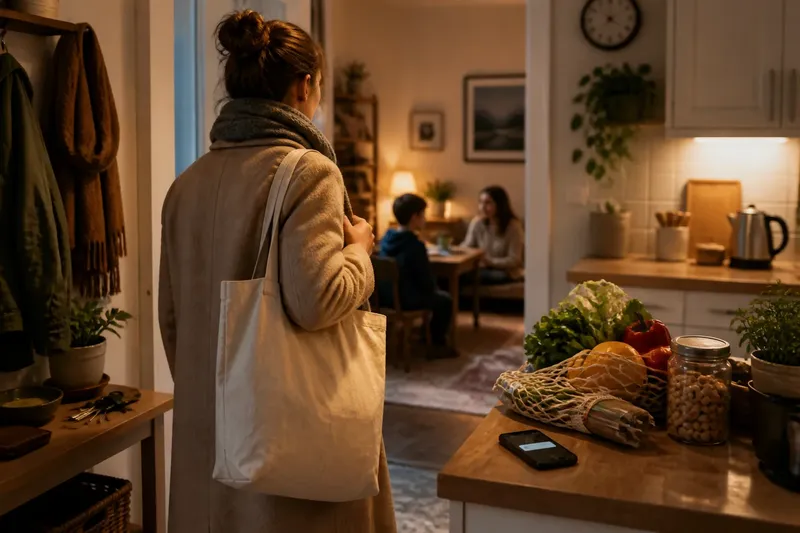
The front door clicks shut, and your coat is still on while the kettle waits in the kitchen. A small arrival ritual for coming home can begin with that ordinary pause: notice what needs doing, then choose the next action instead of moving through the evening on autopilot.
This is not a way to make every return feel peaceful. It is a brief transition that can hold a practical decision, whether that means greeting someone, putting food away or taking a moment before opening the post.
Start with a real cue
A useful ritual attaches to something that already happens. It might be the door closing, the coat going on its hook or the first trip to the kitchen. Choose a cue that does not require you to rearrange the hallway or remember a separate instruction.
Then ask one grounded question: what needs my attention first? The answer might be a person waiting to speak, a bag of chilled food, a wet umbrella or simply the need to take off your shoes. This keeps the ritual responsive to the home you have, rather than an idealised quiet moment.
Make space for choice
After noticing the first demand, pause long enough to distinguish urgency from habit. A phone may be buzzing, but the sound alone does not decide what deserves your attention. If a child is calling or something needs immediate care, respond; the ritual should never delay a real need.
For less pressing matters, pick one next action and begin it. This works like placing a bookmark: it marks where you are, without requiring you to finish every thought carried in from outside. You can return to other tasks when there is room.
Say you arrive with a canvas bag containing groceries, while a message notification appears on your phone. The hypothetical starting point is that the bag includes food that needs putting away, and the message is not urgent. You set the bag on the kitchen counter, put the food in the fridge, then decide whether to read the message; the observable result is that the perishables are stored before your attention moves elsewhere.
Adjust the ritual to the day
Some arrivals are crowded with conversation and household work; others leave a few quiet moments. The ritual can be a single decision in either case. It does not need a fixed duration, a particular mood or a silent room.
If reflection is useful, make a brief note later about what made the transition easier or harder. Keep it practical: perhaps the usual place for keys is blocked, or the shopping bags need a spot closer to the kitchen. Change the arrangement if it reduces friction; leave it alone if the routine already works.
- If your hands are full, check whether an item needs immediate care; if it does, put it where that care can happen, otherwise set it in its usual place.
- If the entrance is obstructed, check for a clear landing spot; if one is available, use it, otherwise move to a safe nearby surface rather than blocking the doorway.
- If someone is speaking to you, check whether they need an answer now; if they do, respond, otherwise say you will come back to the conversation after the immediate task.
- If a notification appears, check whether it signals an urgent matter; if it does, address it, otherwise leave the phone aside until your chosen next action is done.
- If groceries include food that needs prompt storage, check the bag before settling in; if they do, put those items away first, otherwise choose another household task.
- If you have no space to pause, check for the first natural stopping point; if one appears, use it to choose your next action, otherwise keep moving and resume the ritual at the next safe opportunity.
When plans change?
What if I come home in a rush?
Use the cue while continuing towards the urgent task: recognise that you have arrived and choose what needs doing first. There is no need to recreate a longer pause later.
What if home feels tense?
Keep the question practical: what needs attention now, and what can wait? If the situation involves a safety concern or a serious conflict, prioritise immediate safety and seek appropriate support rather than relying on a ritual to resolve it.
Can the ritual include other people?
Yes. A greeting, a shared decision about dinner or helping someone put down their things can be the arrival cue. There is no need for everyone to follow the same routine.
What if I forget for a while?
Use the next familiar cue you notice, such as hanging up your coat or placing your keys down. Treat the pause as available again, not as a habit that must be repaired.
Keep the next step clear
A small arrival ritual for coming home is most useful when it leads to a decision that suits the actual moment. Set aside what needs care, respond to people who need you and let non-urgent demands wait their turn.
Before moving on, name the next action in plain terms: put the food away, wash your hands or sit down for a moment. That simple choice gives the transition a practical edge, without turning the doorway into another place where you are expected to perform well.