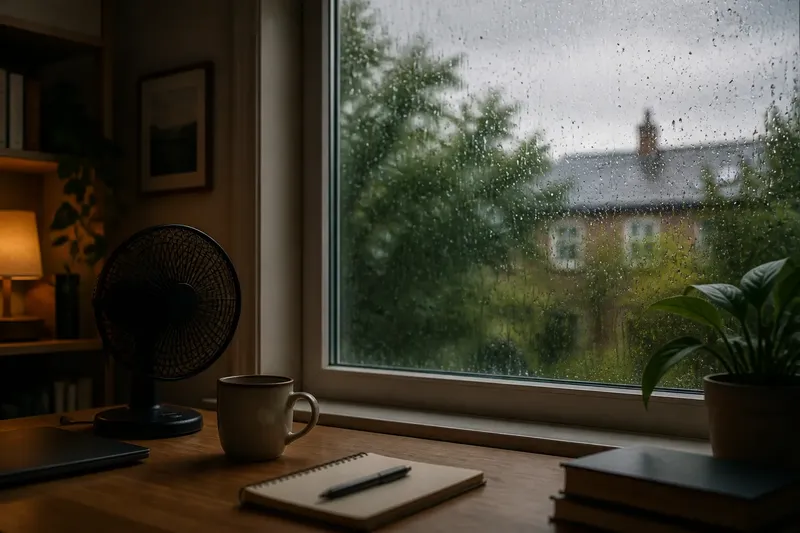
A Quiet Minute or a Written Check-In?
A quiet minute or a written check-in can suit different kinds of attention; compare their strengths and choose a form of reflection that fits the moment.

You reach the kitchen after a crowded afternoon and notice your shoulders are still raised. A quiet minute might let you feel that tension without adding another task; a written check-in might help you name what has been following you home. The choice between a quiet minute and a written check-in is less about which is better than about what kind of attention feels useful just now.
Neither needs to become a daily routine or a test of composure. These five distinctions can help you choose between silent noticing and a few written lines, while leaving room for days when neither appeals.
1. Choose by what you need
Silent noticing is suited to contact with immediate experience: the pressure of your feet on the floor, the hum of a fridge, or a thought passing through without being followed. It asks little of you beyond pausing long enough to notice what is already there.
Writing brings a different kind of attention. Putting a thought into words can make its shape easier to see: perhaps a meeting is occupying your mind, or perhaps you are simply tired. The page gives language a place to land, but it also asks you to choose words and make marks.
Say you have just shut your laptop after an uncomfortable conversation. If you want to feel your hands unclench before doing anything else, sitting quietly may fit. If you keep rehearsing what you wish you had said, a short note such as “I felt rushed when the topic changed” may make the concern more distinct. Both responses are invented possibilities, not a formula for what you should feel.
2. Compare the effort
A quiet minute can be light on materials and decisions. You can pause where you are, without finding a notebook or deciding what counts as a complete reflection. For someone already tired of screens, forms and lists, that simplicity may be welcome.
Writing has a small practical threshold: a pen and scrap paper, or a blank note on a device. It can also feel easier to focus because the hand has a clear job. For others, the blank page creates pressure to produce an insight, and a pause without words feels less demanding.
Think of the difference as choosing between setting down a bag and sorting its contents. Silent noticing can be like putting the bag on the floor and feeling its weight leave your shoulder; writing can be like opening it to see which item has been pressing against you. One offers relief through contact, the other through description, though neither has to lead to a solution.
3. Notice what words change
Writing does not merely record a thought. Selecting one sentence can sharpen a vague impression, but it can also make a passing worry feel more fixed than it was. A useful check-in can stay close to what you can actually notice: “I am worried about tomorrow’s call” is more grounded than a sweeping judgement about your whole week.
Silent reflection avoids that particular act of naming, which may matter when words tend to pull you into explanations. You might notice a tight jaw, a warm mug, and the sound of rain without deciding what any of it means. If an interpretation arrives, you can notice that too, then let your attention return to sensation.
The distinction is not between an honest method and a dishonest one. Both can reveal something; both can also become ways of circling the same concern. If a page starts filling with repeated arguments, stopping is a reasonable choice. If silence turns into a strained effort to empty your mind, there is no need to treat that as failure.
4. Match the moment
Some moments offer privacy and stillness; others happen in a hallway, on a bus, or beside a sink full of dishes. Quiet noticing may be easier where you can pause without being interrupted. A few written words may suit a break when a notebook is already nearby and you want to preserve a thought for later.
The setting need not be ideal. You can notice the feel of a coat sleeve while waiting for the kettle, or jot a phrase on the back of an envelope before recycling it. The point is not to make the surroundings serene, but to choose a form that can meet the actual conditions of the moment.
Writing can also be useful when memory is the main concern: a note may hold onto a detail that would otherwise disappear. Silent noticing asks less of recall because it is directed towards what is present, rather than what you may want to remember. If recording thoughts raises privacy concerns, consider where a device or notebook will be left and who might see it.
5. Let reflection stay small
A written check-in does not have to become a diary entry. A sentence, a few words, or a simple observation may be enough to mark what is on your mind. You might write “restless, distracted, hungry” without explaining each word or searching for a lesson.
Likewise, a quiet minute need not involve controlling your breathing or reaching a calm state. You can let attention move between the chair beneath you and whatever sounds are nearby. If your mind wanders, noticing that movement is already part of the pause; you do not have to force it back into silence.
Keeping reflection brief can protect it from becoming another obligation. A longer entry might suit a day when you have space and want to untangle a complicated thought, while no entry at all may suit a day when putting things down matters more than examining them. There is no requirement to maintain a streak, preserve every note, or turn each pause into a record of progress.
Which form suits this moment?
Is silent noticing the same as meditation?
Not necessarily. Here it means pausing to notice present sensations or thoughts without needing to follow a formal practice. You can do it briefly in an ordinary setting and stop when you wish.
What should I write in a check-in?
Start with what is easy to name: a feeling, a physical sensation, or the thought taking up the most attention. One plain sentence can be enough; there is no need to explain it or end with an answer.
What if a quiet pause makes me restless?
Restlessness is a useful observation, not evidence that you have paused incorrectly. You could notice where it shows up in your body, write a few words about it, or leave the reflection for another time.
Can I move between writing and silence?
Yes. You might notice quietly first and write only if a thought still feels worth keeping, or write a phrase and then sit without adding more. Treat the order as an option rather than a sequence you must complete.
Choose without a rule
A quiet minute and a written check-in offer different ways to meet attention: one stays with immediate experience, while the other gives experience a verbal shape. Your preference may change with the place, the concern and the energy you have available.
For a quiet minute or a written check-in, the most useful question may be modest: would words help me see this more clearly, or would noticing without words feel kinder? If neither answer comes readily, you can simply carry on with the kettle, the dishes or the journey home. Reflection can be available without becoming an appointment.